

Studio Rebekka Vanderhaeghen
is a Belgian interdisciplinary art and design studio
creating sculptural artworks,
collectible lighting and wearable objects that
explore the relationship between light,
colour and human wellbeing.
Founded by Belgian visual artist and designer
Rebekka Vanderhaeghen,
the studio works across disciplines, blurring the
boundaries between contemporary art,
collectible design and sensory experience.
Each piece is created with the intention of transforming
not only a space, but also the way we feel within it.
Light objects that transform how you feel,
sculptural artworks that capture the energy of life,
wearable art pieces designed to inspire and
shift how we see,feel and experience life.
She sculpts different materials into emotion.
A sensory exploration of body, mind, and nature.
Every work is an invitation to reconnect.
Rebekka’s artistic practice is rooted in an
interdisciplinary background spanning
contemporary dance, photography, fashion,
sculpture and wellbeing.
Together, these disciplines have shaped an
enduring fascination with the
relationship between body, mind,
material and space.
INTERVIEW FOSBURY & SONS WITH REBEKKA VANDERHAEGHEN
JUNE 2026You have a background in contemporary dance, photography and fashion, quite an unusual path for a visual artist.
How did all of these worlds eventually lead you to sculpture and light objects?
My path hasn’t been linear, but it has always been guided by
the same impulse:to explore how we feel,
and how that feeling can take form.
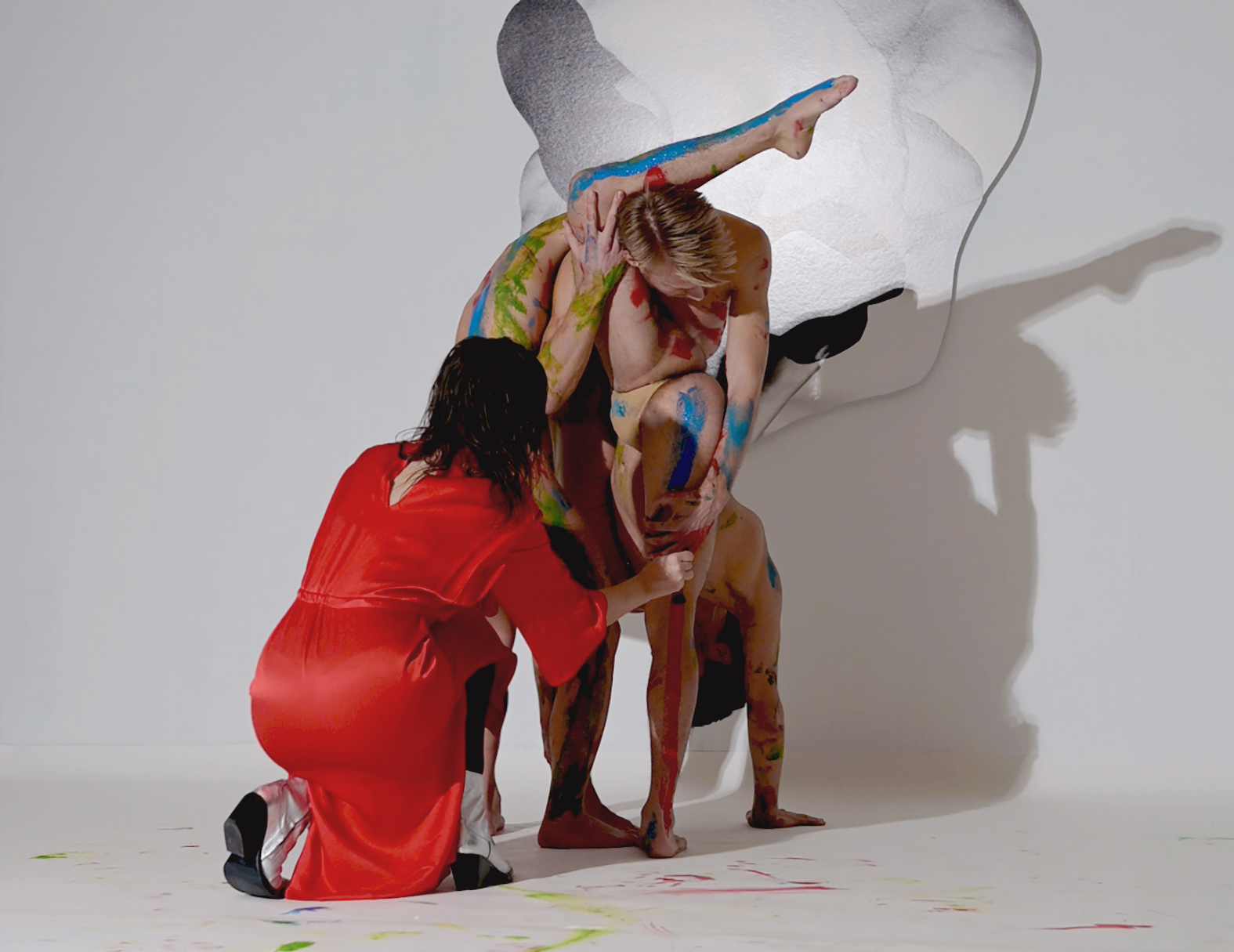
I initially trained in contemporary dance. Movement was my
first language a way to understand the body, emotion and
presence.When injuries forced me to stop, I had to find another
way to express that same inner world.
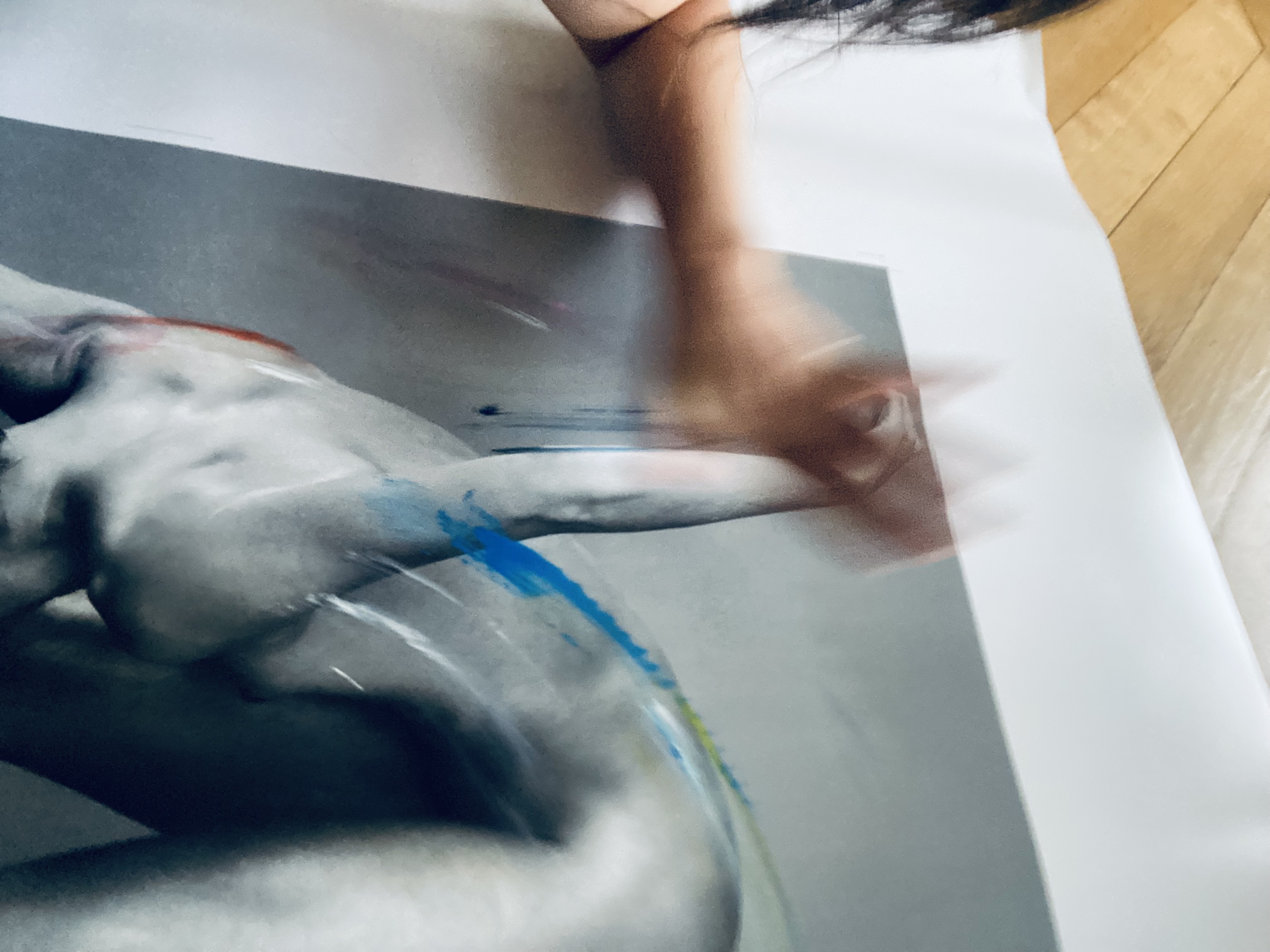
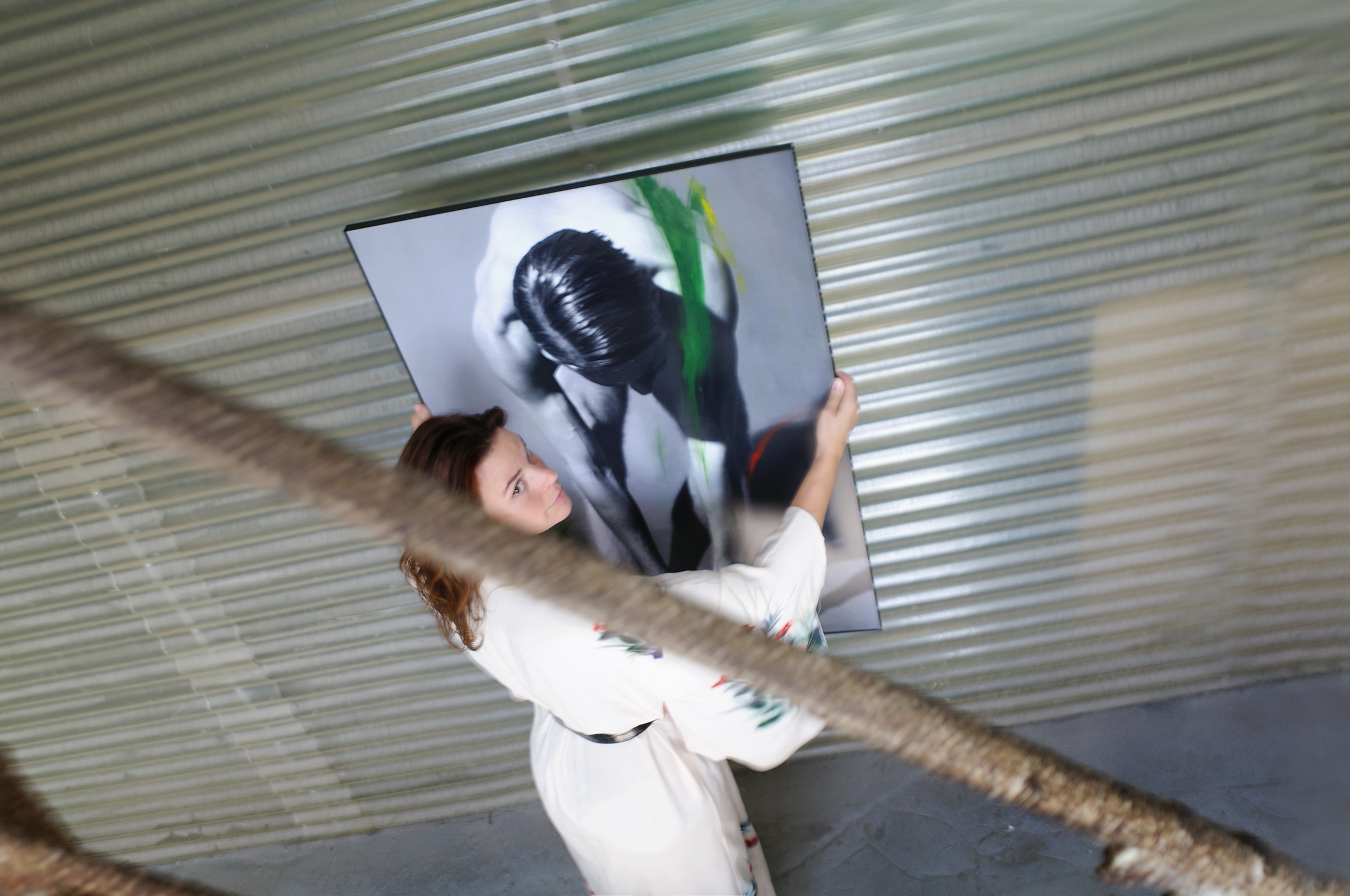
Photography became that medium.Through the lens, I continued
working with bodies,capturing them almost like painterly figures
then gradually transforming them into more fluid,
abstract compositions.They where never about
documentation,but about creating and feeling.
In 2012, my mother passed away unexpectedly.
She was a multidisciplinary artist and fashion designer,and her
work carried a very strong, expressive universe.
Together with my sister, I continued her life’s work for several
years.That period brought me closer to materials,to making,
and to the dialogue between different ar forms, fashion,
objects and interiors.
Eventually, I felt the need to return to my own voice.
Around that time, I went through an illness
that shifted my perspective deeply.
It brought me back to the body in a different way,not as
performance, but as a space of awareness.
Next to healthy nutrition, movement and good sleep,
I became obsessively interested in how our environment
, our thoughts, and the energy around us can influence
how we feel.This is where my current work originates.
Today, I create objects that are not only meant to be seen,
but to be felt. Through light, colour and material,
I try to shape an atmosphere, something that can subtly shift
perception, calm, activate or reconnect.
It began with small, intimate pieces of jewellery objects to
carry meaning, memory and intention.
And it has evolved into larger works, such as Amon-Ra.
With Amon-Ra, I bring together sculpture and light as a living
presence within a space. Something that changes
throughout the day, that interacts quietly with the body
and the mind.
In many ways,it feels like a continuation of everything that
came before, just expressed in a new form.
With Studio Rebekka Vanderhaeghen i want to bring all of this
together; art, design and wellbeing.
Amon-Ra took almost 1,5 years to come to life. What was the moment you
knew the object had finally become what you envisioned?
The essence of Amon-Ra was clear from the beginning,
the desire to capture the energy of colour
and translate it into a physical object that can transform
how we feel. The shape mimics the sun
or the moon but in a more sculptural, organic
and imperfect way .
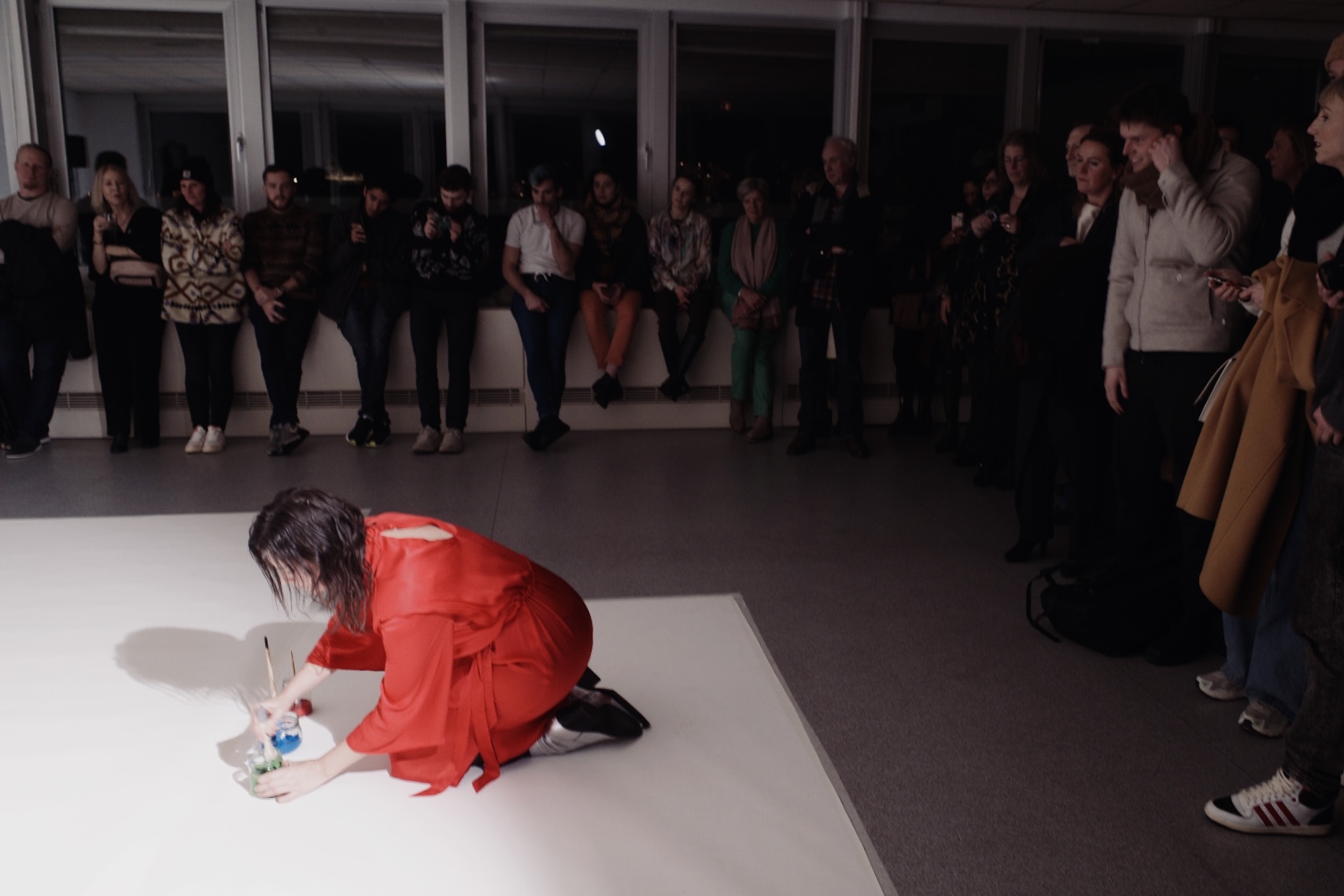
The first experiments took place on my kitchen floor. I started
casting by hand, layer by layer,
learning how colour behaves within resin, how it blends
diffuses, or becomes more opaque.
It was a process of trial and error, but also of letting go of
control and working with the material
rather than against it.
Initially, I imagined the piece purely as an object standing
against the wall, almost like a seventies-inspired vibe..
But over time, I realised it needed more flexibility.
Not every space offers an empty wall, and I wanted the piece
to move with its environment.
That led to the development of a stand
allowing it to shift between spaces and contexts,
from a living room to a bedroom, or even outdoors
in the evening.
Afterwards I worked on a wall system that could support the
object in a minimal way, whil integrating light that can be
dimmed and adapted in temperature.
Given the weight of the piece, this required a careful balance
between strength and refinement, developed in collaboration
with different craftsmen and ateliers.
The moment it felt complete was when all these elements came
together when it worked not only as a form, but as an
experience. When it could exist as a sculptural presence during
the day, and then, in th evening, shift the atmosphere of a
space through light.
What does the name Amon-Ra (the Egyptian Sun God) mean to you personally? Why was that the right name for this piece?
The name Amon-Ra came quite intuitively, but it carries a
deeper layer of meaning for me.
Ancient Egypt has always fascinated me as a place where life,
architecture and ritual were deeply connected to the rhythms of
the sun, the moon and the cosmos.
There was a strong awareness of
how these forces influence both our physical and emotional
world, something I feel we have partly lost today.
With Amon-Ra, I wanted to reconnect to that idea. Not in a
literal or historical sense, but as a reminder of living with
intention, in alignment with the energy that surrounds us.
The circular form of the piece also plays an important role.
Circles have a universal language,
they create a sense of calm and wholeness, while symbolising
continuity, cycles, and infinity.
Beginning and end at the same time.
For me, Amon-Ra as the sun god and a symbol of
creation represents the act of consciously
shaping how we live, how we feel, and the environments
we create around us.
You describe color as a tool to influence the nervous system. How so? And how do you choose a color combination for a piece? Is it intuitively or something else entirely?
Colour is not just beautiful and decorative, it’s something we
physically and emotionally respond to.
Light enters through the eyes and is processed directly by the
brain, particularly in areas linked
to emotion, such as the limbic system. Different wavelengths, what we perceive as colours,
can either stimulate or calm the nervous system, depending on
how they are used.In a general sense, warmer and brighter
tones, like red, orange or yellows, tend to activate and
energise. Cooler or more muted tones, such as blue, green,
violet or deeper earth tones, can have
a more calming, grounding effect. But it’s never that simple.
The impact of colour always depends
on intensity, light, material, cultural interpretation and context.
For example, a bright, saturated red can feel intense and
stimulating, while a deeper, softer red
in a translucent material can become warm, sensual and
soothing. The same applies to all colours,
they shift depending on how they are shaped and experienced.
When I create a piece, I usually start with one dominant
colour. This becomes the anchor, the
tone that most strongly influences the atmosphere. From there,
I introduce a secondary colour,
sometimes complementary, sometimes more tonal, guided by
the kind of feeling I want to evoke.
In custom work, this becomes more of a dialogue. I listen to
how someone wants to feel in a
space, calm, energised, grounded, focused and translate that
into colour tones and combinations,
always in relation to the interior.
I also believe strongly in the role of art itself. Beyond colour,
the presence of an artwork can shift how we experience a
space, lifting mood, reducing stress, and creating
moments of pause or reflection.
So for me, colour is both intuitive and intentional.
It’s a tool, but also a language,
one that works quietly on how we feel and move.
You work with the idea that our environment and the energy we surround
ourselves with can shape our wellbeing, kind of similar vision as we have at Fosbury & Sons. How does this belief translate into your work?
I strongly believe that the spaces we inhabit have a direct
impact on how we feel, think and function.
Not only in an aesthetic sense, but on an emotional and even
physical level.
We are constantly in dialogue with our environment, through
light, colour, materials, proportions,
of which are rooted in nature. Even when we are not
consciously aware of it, these elements
influence our nervous system and our state of being.
This belief translates into my work by approaching each piece
not just as an object,but something that contributes
to an atmosphere.
With my light objects, for example, I work very deliberately
with colour and light intensity to create different emotional
responses, whether it’s a sense of calm, focus, grounding or
energy.
The materiality also plays a role: how light diffuses,
how soft or vibrant it feels,
how it interacts with the surrounding space.
At the same time, I’m interested in creating pieces that invite
a moment of pause to recharge In often fast-paced
environments, I think there is real value in objects that help
us slow down,reconnect, recharge or simply feel more at ease.
What energy, idea, take-away,... do you hope your piece brings to our members and co-working community?
To begin with, I’m very happy with how Amon-Ra is presented
within the building. It reflects
perfectly what the work stands for, thoughtfully designed
architecture, surrounded by nature,
with space for focus, connecting and pause.
For this location, I chose a composition of deep Mars red and
ocean blue.
These colours create a balance within the space they
complement the trees outside,
while also bringing a sense of grounding and quiet energy
to the interior.
In a dynamic environment like Fosbury & Sons,
I see the piece as something that can both recharge and
centre.
I also intentionally chose its placement on the seventh floor, in
a spot where people can sit and take a moment.
I like the idea that it could become part of a small,
personal ritual, a pause between meetings, a moment to reset,
to reconnect, even briefly.
More than anything, I hope the piece offers a subtle shift.
Not something overwhelming, but
something that is felt over time. A presence that invites people
to slow down,to become aware of their surroundings,
and perhaps also a bit more aware of themselves.